Night Swimming
Subject
Across ancient and contemporary rituals, immersion in water, swimming or bathing, has been communal, regenerative, and symbolically intimate. Under secular modernity, bathing has largely become a private, functional routine, stripped of shared cultural meaning. Urban water has been abstracted into H₂O, a technical resource governed by engineering, policy, and extraction. This “modern water” appears as a measurable unit, hidden in pipes, regulated in reservoirs, or commodified as leisure. Meanwhile, collective imaginaries are saturated with catastrophic floods and survivalist scarcity, limiting our ability to imagine affirmative relations with water beyond crisis.
Yet water rituals endure as practices of continuity, care, and refusal. They suggest futures in which water is not a passive backdrop but an active participant in shaping bodies, solidarities, and worlds.
This charrette begins from the premise that water is not only a chemical compound but also a medium of imagination, relation, and governance. Adopting a hydrological turn, we approach water as collaborator, co-producing bodies, publics, and politics. Drawing on Indigenous teachings and posthumanist scholarship that describe humans as “water walking,” we recognize that internal waterscapes are continuous with (and accountable to) the external environment. If water is a collaborator rather than a resource, we must learn to listen and move with it, beyond human permissions and control.
Challenge
Participants are asked to move beyond apocalyptic fatalism and design spatial and material interventions through the lens of night swimming. To design with water as a shaping force is to attend to its agency and work through reciprocity, multispecies entanglement, and hydro-social justice.
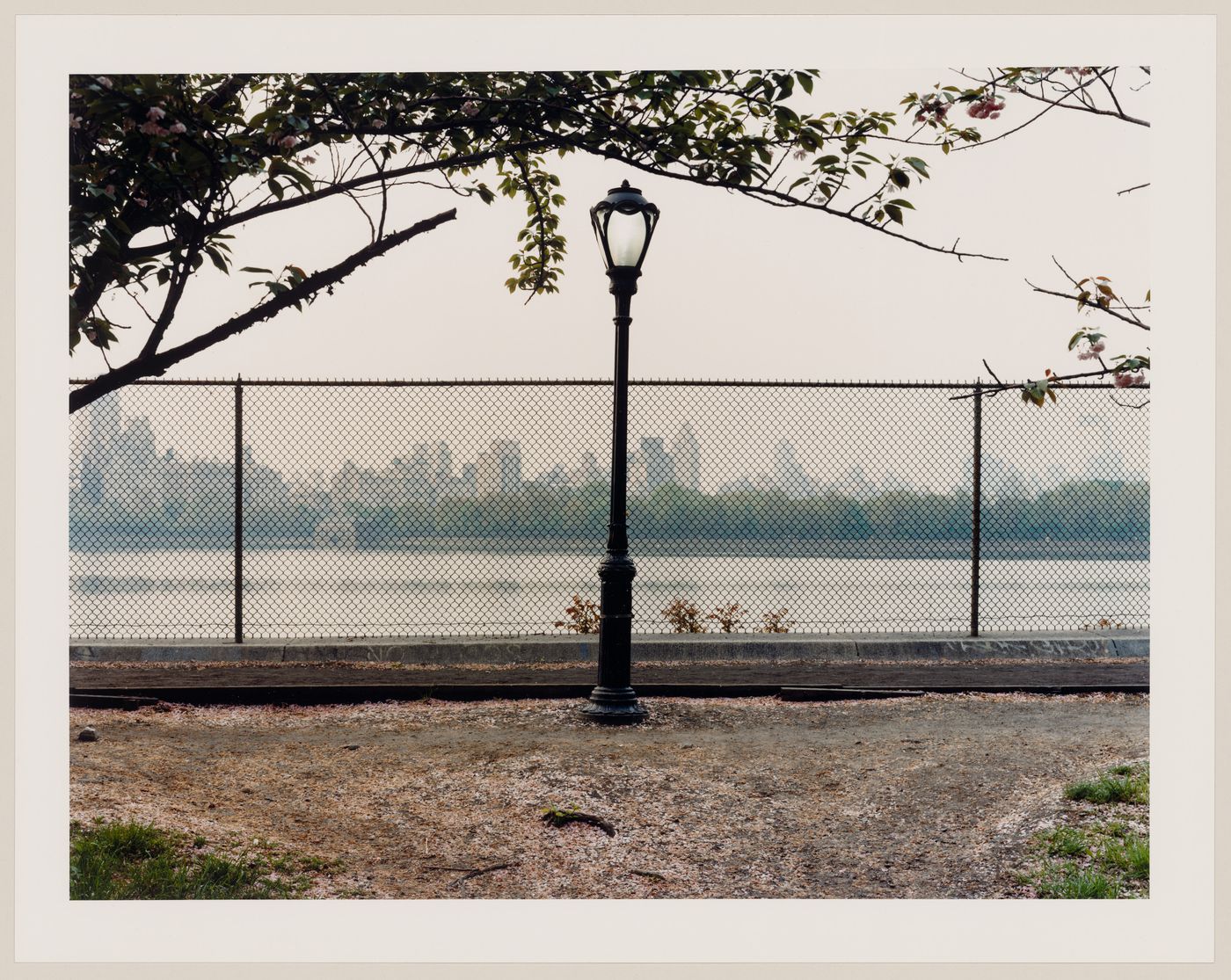
Select a currently inaccessible water threshold in your city that could become a communal site for new night rituals: a riverbank, canal, reservoir, waterfront, or seashore.
Night swimming operates as both a method and a metaphor. It reveals the legal, spatial, and sensory architectures regulating nocturnal access to water. Darkness alters temperature gradients, sound propagation, navigation and visibility for humans and nonhumans alike. Smell signals toxicity or invitation; reflection and refraction intensify under moonlight; immersion becomes a heightened threshold experience. For some, these conditions amplify the danger in trespassing, of contamination, or being invisible. For others, they create possibilities for privacy, solidarity, and ritual.
Moving through darkness recalibrates perception. Vulnerability intensifies, human dominance softens, and water’s agency comes to the fore. Reframed as a ritual of radical humility, in which water owns itself, and humans are guests, night swimming invites participants to reclaim the imaginative ‘dream-water‘ (Illich/Bachelard) embedded in cultural memory.
Treat nocturnal sensoria as design parameters. Articulate how your design proposal redistributes risk, scaffolds mutual aid, and transforms informal access to water into poetic ritual, political resistance, and/or collective care. Reflect on your position and embodied histories as part of ethical engagement with water and with one another.
Bibliography
Bachelard, Gaston. Water and Dreams: An Essay on the Imagination of Matter. Translated by Edith R. Farrell. Dallas: Pegasus Foundation, 1983.
Blackstock, Michael. 2001. “Water: A First Nations’ spiritual and ecological perspective.” B.C. Journal of Ecosystem Management 1 (1): 1–14. DOI: https://doi.org/10.22230/jem.2001v1n1a216
Chen, Cecilia, Janine MacLeod, and Astrida Neimanis, eds. Thinking with Water. Montreal: McGill-Queen’s University Press, 2013.
Conseil jeunesse de Montréal. Montréal nocturne : perspective jeunesse sur l’utilisation des espaces publics. Montréal: Ville de Montréal, 2022. https://ville.montreal.qc.ca/pls/portal/docs/page/cons_jeunesse_fr/media/documents/avis_montreal_nocturne.pdf.
Cossette, Sarah-Maude, Mélissa Moriceau, Amani Braa, Chloé Couvy, et.al. “Chiller et autres faits ordinaires. Les jeunes, la nuit à Montréal” Ethnologies, 85–106, vol. 44, no. 1 (2022). DOI: https://doi.org/10.7202/1096058ar
Giedion, Sigfried. “The Mechanization of the Bath.” In Mechanization Takes Command: A Contribution to Anonymous History, 627–683. New York: Oxford University Press, 1948.
Fondation Rivières. La Fondation Rivières œuvre à l’accès, la protection, la valorisation et la restauration des rivières dans le but de préserver leur caractère naturel et d’en assurer une utilisation humaine responsable et pérenne. https://fondationrivieres.org/
Illich, Ivan. H₂O and the Waters of Forgetfulness: Reflections on the Historicity of “Stuff.” Dallas: Dallas Institute of Humanities and Culture, 1985.
Kaika, Maria. City of Flows: Modernity, Nature, and the City. Routledge, 2005.
King, Joyce Tekahnawiiaks. “The Value of Water and the Meaning of Water Law for the Native Americans Known as the Haudenosaunee.” Cornell Journal of Law and Public Policy 16, no. 3 (2007): Article 1. https://scholarship.law.cornell.edu/cjlpp/vol16/iss3/1/.
Linton, Jamie. What Is Water? The History of a Modern Abstraction. Vancouver: UBC Press, 2010.
Mennie, Al. Night Swimming: How to Swim Through the Darkness, Watkins, 2025.
Mentz, Steve. An Introduction to the Blue Humanities. Routledge, 2023.
Morshed, Adnan Zillur. “Water as a Disciplinary Challenge in Architectural History.” Water History 16 (2024): 1–20.
Neimanis, Astrida. Bodies of Water: Posthuman Feminist Phenomenology. London: Bloomsbury Academic, 2017.
Oppermann, Serpil. Blue Humanities: Storied Waterscapes in the Anthropocene. Cambridge University Press, 2023.
Outwater, Alice. Water: A Natural History. New York: Basic Books, 1996.
Pearson, Christie. The Architecture of Bathing: Body, Landscape, and Art. Cambridge, MA: MIT Press, 2020.
Swyngedouw, Erik. Social Power and the Urbanization of Water. OUP, 2004.
Understand Flooding - Flood maps and river flows, in Calgary https://www.calgary.ca/water/flooding/flood-maps-river-flows.html
Wiltse, Jeff. Contested Waters: A History of Swimming Pools in America. Chapel Hill: University of North Carolina Press, 2007.
Wong, Rita, and Dorothy Christian, eds. Downstream: Reimagining Water. Waterloo, ON: Wilfrid Laurier University Press, 2017.
Basic Montréal Cartography
Division de la Géomatique, Ville de Montréal http://montreal.maps.arcgis.com/apps/Viewer/index.html?appid=d14c748bae7f4bdf8bf50e78f5329420
Cartographie du Schéma d'aménagement et de développement, publié par Ville de Montréal https://smvt.maps.arcgis.com/apps/webappviewer/index.html?id=d152aaa85b6f4e9086cecdf10c7456db
Carte-index des plans d’utilisation du sol de la ville de Montréal